4 min read
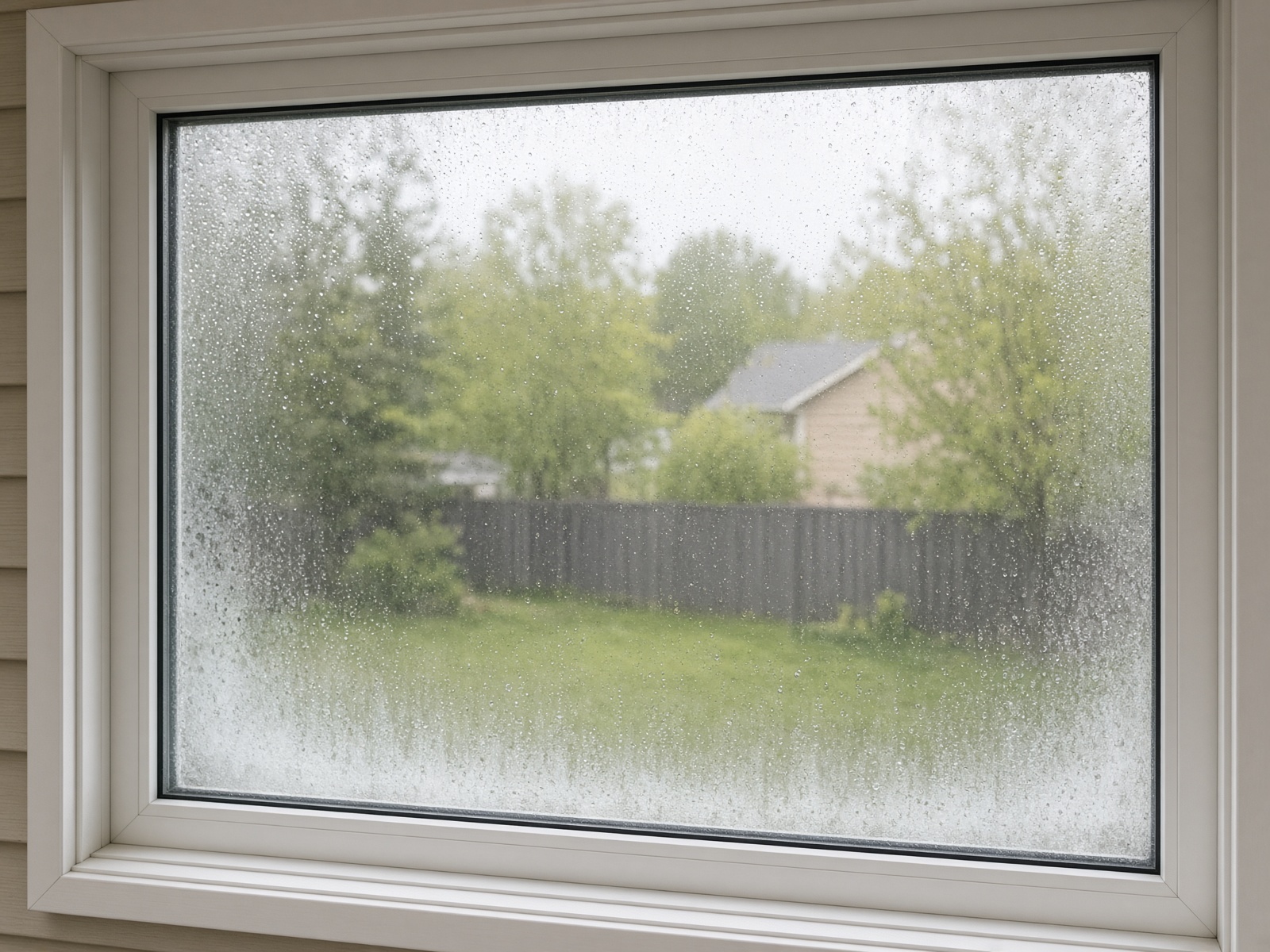
If you own a home in Wise, Denton, or Parker County, you’ve likely noticed a frustrating phenomenon: you rinse down your exterior windows to wash away dust, only to watch them dry into a hazy, chalky mosaic of white circles.
Even worse, if you have an automated lawn irrigation system, the windows closest to your flowerbeds and turf probably feature a dense crust of stubborn spots that no amount of household glass cleaner or paper towels can budge.
Those cloudy white marks aren't just dirt—they are hard water mineral deposits.
Left untreated under the relentless North Texas sun, this buildup shifts from a cosmetic nuisance to irreversible structural damage known as glass etching.
Here is the chemical reality behind North Texas water, why standard DIY fixes actually worsen the damage, and how professional pure-water technology restores clarity to your home's glass.
Dissolved mineral deposits—primarily calcium, magnesium, and silica. When sprinkler overspray or tap water strikes glass and evaporates under heat, the water disappears into the air while the solid minerals stay behind, chemically bonding to the porous surface of the pane.
To understand why water spots are so difficult to remove, it helps to understand two things: what is in North Texas water, and what glass actually looks like under a microscope.
Groundwater and municipal tap water across North Texas are notoriously "hard," carrying elevated levels of dissolved minerals—predominantly calcium carbonate, magnesium, and silica. In rural pockets of Wise and Parker Counties reliant on private water wells, mineral concentrations are often even higher.
At the same time, while glass feels completely smooth to the human fingertip, it is actually a porous, microscopic silica grid.
When an irrigation head sprays untreated tap or well water onto an exterior pane, the liquid rapidly evaporates in the triple-digit Texas heat. The dissolved calcium and magnesium cannot evaporate, so they precipitate out, settling directly into the microscopic valleys of the glass.
Everyday dust, pollen, and windblown soil sit loosely on the surface of the pane. A standard squeegee and mild surfactant can wipe them away cleanly.
Mineral deposits, however, follow a far more destructive path categorized into two distinct stages:
In this initial phase, calcium and magnesium salts form a crusty, alkaline layer over the pane. The spots are raised, rough to the touch, and diffuse sunlight, causing a persistent white haze. At Stage 1, the minerals sit on top of the glass and can still be chemically dissolved and extracted without permanent glass loss.
If Stage 1 deposits sit exposed to UV radiation and ambient heat over multiple seasons, a chemical reaction occurs. The alkaline minerals react with the silica matrix of the glass itself, leaching sodium from the pane and eating microscopic pits into the surface. At this stage, the glass is physically damaged. Even if the mineral crust is scrubbed away, the pane remains permanently pitted, milky, and scarred.
Rarely for Stage 2 scale, and it carries major scratch risks. While mild household acids like white vinegar can dissolve faint, fresh surface spots, they lack the chemical strength to break down baked-on silica scale. Scraping with razor blades or abrasive kitchen pads on modern tempered or coated glass often catches hard mineral grains, dragging them across the pane and leaving permanent, irreversible scratches.
When homeowners notice spotty glass, the instinctive reaction is often to grab the garden hose and a scrub brush or spray an over-the-counter blue glass cleaner. Unfortunately, this usually accelerates the damage:
Tackling severe hard water buildup requires a two-part scientific approach: chemical descaling for bonded buildup, followed by pure-water rinsing to ensure a flawless, residue-free finish.
| Method | Water Source | Filtration Level | Result on Glass |
|---|---|---|---|
| Garden Hose & Tap | Municipal / Well | 0% (150–400+ PPM dissolved solids) | Dries chalky; bakes new calcium scale into pores |
| Store-Bought Spray | Tap + Detergents | Added dyes, soaps, and fragrances | Leaves sticky film that attracts airborne dirt |
| Professional RO/DI System | Multi-Stage Filtered | 100% Mineral-Free (0 PPM dissolved solids) | Dries completely spot-free with zero residue |
To lift existing Stage 1 deposits without scratching the pane, specialized acidic restoration compounds are applied. These professional-grade solutions chemically break the ionic bond between the calcium scale and the silica pores of the glass, safely liquefying the crust without abrasive mechanical force.
Once the mineral bond is broken, ordinary water cannot be used for the final rinse. Professional window cleaners use multi-stage filtration carts that run water through sediment pre-filters, carbon blocks, a reverse osmosis (RO) membrane, and a final deionization (DI) resin chamber.
This process strips out all Total Dissolved Solids (TDS), bringing the mineral count down to 0 parts per million (PPM).
Because 0 PPM pure water contains zero dissolved solids, it acts like a natural sponge. It flushes away suspended mineral slurry, washes clean through the frame tracks, and evaporates completely into thin air—leaving the glass dry, pristine, and streak-free.
Are sprinkler heads leaving a milky film across your living room or patio windows? Don't wait until summer heat turns surface deposits into permanent glass etching.
At Wrangler Washers, we specialize in dedicated exterior window restoration and pure-water cleaning throughout Wise, Denton, and Parker Counties. Our specialized equipment and mineral-free pure water process safely remove stubborn scale, protect your glass seals, and restore true clarity to your home.
Stop fighting stubborn sprinkler spots with products that don't work. Contact our team to evaluate your glass and see how our pure-water cleaning process can revitalize your exterior view.