5 min read
Investing in a rooftop or ground-mount photovoltaic (PV) solar system is one of the smartest ways to hedge against soaring Texas electric rates. Whether you operate a commercial array along the bustling I-35 and US-377 growth corridors or power a residential homestead on rural acreage across Wise, Denton, and Parker Counties, the goal is identical: produce maximum kilowatt-hours (kWh) and minimize grid reliance. Yet, many system owners notice a perplexing trend after their first year or two: despite long, cloudless summer days, monthly solar production starts trending steadily downward.
The culprit is rarely an electrical glitch or inverter failure. It is environmental soiling—a dense, baked-on crust of cedar pollen, agricultural dust, and highway exhaust film that forms an opaque barrier over your panels.
No. Rain does not clean solar panels; it often makes them dirtier. Rain drops collect atmospheric dust on the way down, and when the moisture hits a hot panel and evaporates, it leaves behind muddy rings and concentrated spots that worsen solar obstruction.
When solar systems are sold, buyers are frequently told that routine rainfall will wash away accumulated grime. While that might hold true in regions with gentle mist and zero dust, North Texas operates under radically different environmental conditions.
Properties across the DFW Metroplex contend with specific airborne contaminants that rain simply cannot dissolve:
When rain falls onto this cocktail of grit, it merely shifts the debris around. As the Texas sun emerges and rapidly dries the moisture, it bakes the sediment into a cloudy, hardened film—much like the dirty windshield of a car parked outside after a light summer shower.
The physical consequence of a soiled panel is known as micro-shading. Photovoltaic cells require direct, unhindered photon penetration to generate direct current (DC) electricity. When even a faint layer of dust coats the glass, photons bounce off the surface instead of striking the silicon wafers underneath.
Industry studies and field performance data consistently show that dirty solar panels lead to measurable, compounding losses:
Anywhere from $30 to $100+ per month on residential systems. A typical 10 kW residential system producing 20% less energy due to grime forces the home to pull hundreds of additional kilowatt-hours from the utility grid at peak retail rates, erasing a substantial chunk of your solar return on investment.
When homeowners notice their panels are covered in dust, the natural temptation is to grab a high-pressure wand or spray them with a standard garden hose. Doing so can cause catastrophic, expensive damage.
| Method | Risks Involved | Impact on Warranty |
|---|---|---|
| High-Pressure Washer | Strips anti-reflective coating; shatters glass; blows past silicone frame seals | Voids Manufacturer Warranty |
| Standard Tap or Well Water | Leaves calcium/silica mineral scale; creates thermal shock fractures | Accelerates Glass Etching & Loss |
| Abrasive Sponges & Detergents | Scratches tempered glass; soap residue attracts fresh pollen | Leaves Sticky Film |
| Professional RO/DI Pure Water | Zero mechanical force; no chemicals; mineral-free spot-free evaporation | Maintains Full Warranty Compliance |
During peak Texas daylight, solar glass can reach internal temperatures exceeding 150°F. Blasting cold tap water (typically 60°F–70°F) directly onto scorching glass causes instant thermal shock, leading to micro-fractures or spiderweb glass shattering that destroys the panel instantly.
Municipal and rural well water in Denton, Wise, and Parker Counties contains high levels of dissolved calcium, magnesium, and silica. Spraying panels with a garden hose leaves these minerals behind to bake under the sun. This creates a permanent white haze that reflects sunlight and is virtually impossible to remove without specialized restoration.
Commercial pressure washers operating at 2,000+ PSI easily force water past the delicate butyl and silicone gaskets protecting the panel's internal wiring, causing ground faults and inverter shutdowns. Furthermore, pressure blasting strips off the microscopic anti-reflective coating engineered into modern photovoltaic glass.
Beyond equipment risks, cleaning solar panels presents substantial physical danger. Rooftops in North Texas often feature steep, multi-story pitches.
Walking on a roof with a wet hose, slippery overspray, and electrical conduits running underfoot creates an extreme fall hazard. Stepping on the face of a solar panel or placing your weight on an aluminum frame will crack the internal silicon cells, permanently destroying its generation capacity without leaving a visible mark on the outer glass.
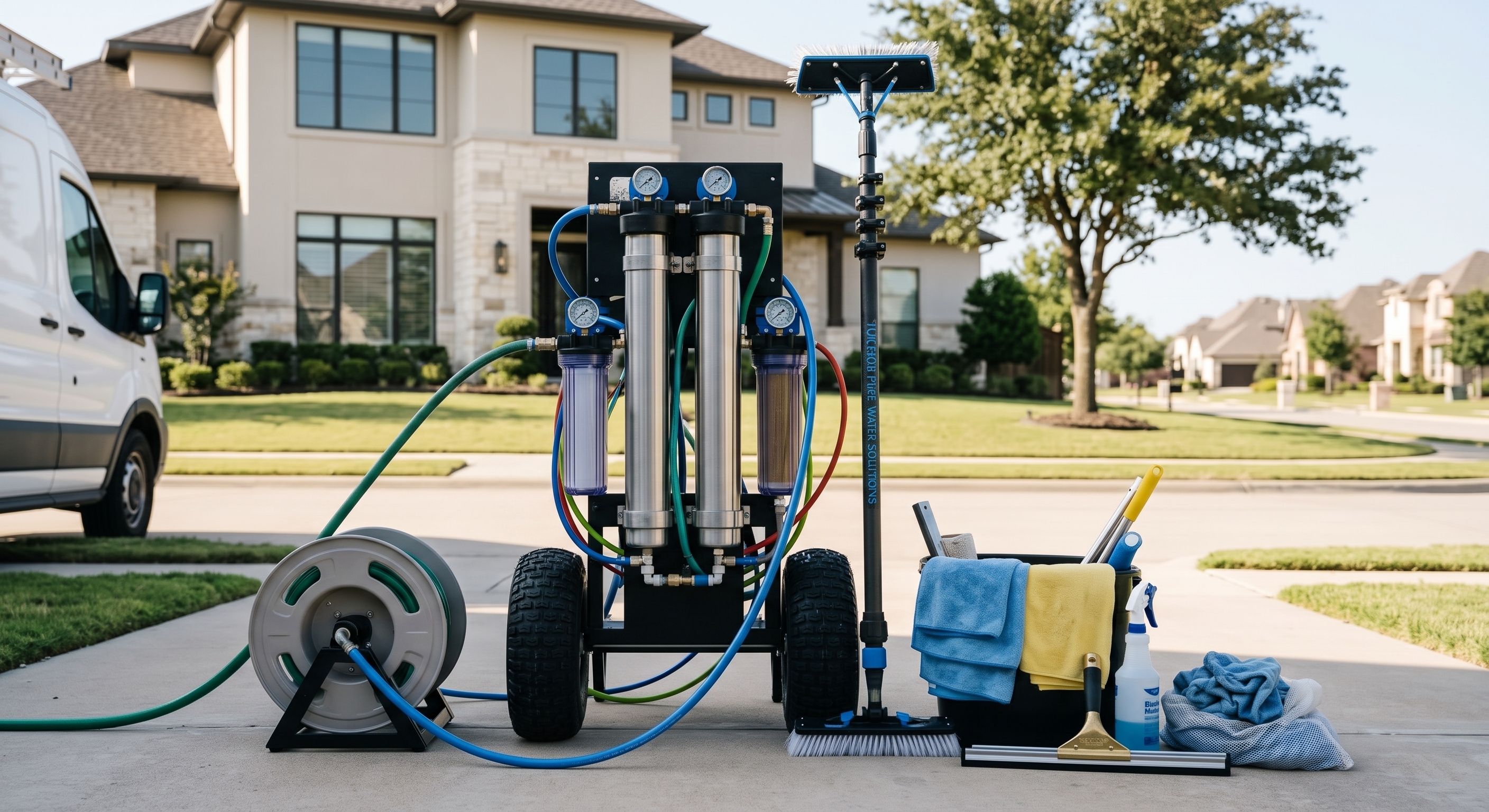
Professional solar technicians utilize telescopic water-fed poles fitted with ultra-soft nylon bristles and multi-stage Reverse Osmosis / Deionization (RO/DI) filtration carts. This equipment purges 100% of dissolved minerals from the water, allowing the glass to dry naturally, spot-free, without applying foot traffic to your roofing shingles or panel frames.
Every sunny afternoon your panels sit beneath a blanket of North Texas dust, pollen, and road soot is another day of lost savings. Don't let environmental buildup compromise your clean-energy investment.
At Wrangler Washers, we provide certified, low-pressure, pure-water solar panel cleaning throughout Wise, Denton, and Parker Counties. Our specialized deionized water systems remove stubborn films and bird deposits safely—preserving your manufacturer warranties and restoring your system to peak kilowatt-hour generation.
Prep your panels before the peak summer heat arrives to ensure you capture every ray of sunlight.