Published by Abraham Edington | August 2026
Clear Glass, Clear Warning: 5 Critical Reasons Professional Window Cleaning Protects Your Home's Structural Health
When homeowners think about window cleaning, they usually view it through the lens of pure aesthetics. There is an undeniable satisfaction that comes with watching months of built-up pollen, dust, and rain spots vanish beneath a professional squeegee or pure-water pole. Crystal-clear glass lets in that brilliant, crisp sunlight that instantly elevates your interior spaces and transforms your home's curb appeal.
However, at Wrangler Washers, we know that professional window cleaning delivers far more than just visual gratification.
Your windows are high-performance mechanical barriers designed to insulate your living space against extreme weather, moisture, and noise. Beneath the surface, your window units are under constant stress from temperature fluctuations, building settling, and UV exposure.
When Wrangler Washers cleans your glass, we aren't just wiping away dirt—we are performing a visual diagnostic on your home's thermal envelope. Regular window maintenance is your first line of defense in spotting early warning signs of window failure, specifically broken window seals.
Here are five key reasons why professional window cleaning is vital for your home—and how it helps you catch critical window damage before it turns into a costly home repair disaster.
1. Clean Windows Reveal Early Broken Seals Before Your Warranty Expires
Most modern residential windows are Insulated Glass Units (IGUs)—two or three panes of glass hermetically sealed around a spacer bar, with the gap between the panes filled with an insulating gas such as argon or krypton. That sealed gas layer is what gives a double-pane window its insulating value and its resistance to condensation. When the perimeter seal fails, the gas escapes, humid room air migrates into the gap, and moisture condenses on the inside of the glass.
The first visible symptom is a permanent fog, haze, or streaking trapped between the panes that no amount of cleaning will remove—because the problem is inside the sealed unit, not on the surface. Homeowners frequently mistake this internal condensation for ordinary surface dirt and keep wiping the glass, never realizing the seal has already broken. A trained technician cleaning the exterior can instantly distinguish between surface soil and the telltale internal haze of a failed IGU, flagging the failure while the pane is still covered.
Reputable window manufacturers typically warranty the insulated glass seal for 10 to 20 years against seal failure and fogging. If that broken seal goes unnoticed until the warranty lapses, the homeowner absorbs the full replacement cost. Caught early during a routine professional cleaning, the failed sash can often be swapped as an IGU-only replacement under warranty, rather than replacing the entire window frame. Many homeowner's insurance policies also have specific windows for addressing sudden glass damage, but only if the failure is documented promptly. Regular professional cleaning gives you a chance to notice when a failure first becomes visible, so you can document and report it to your manufacturer or insurer yourself.
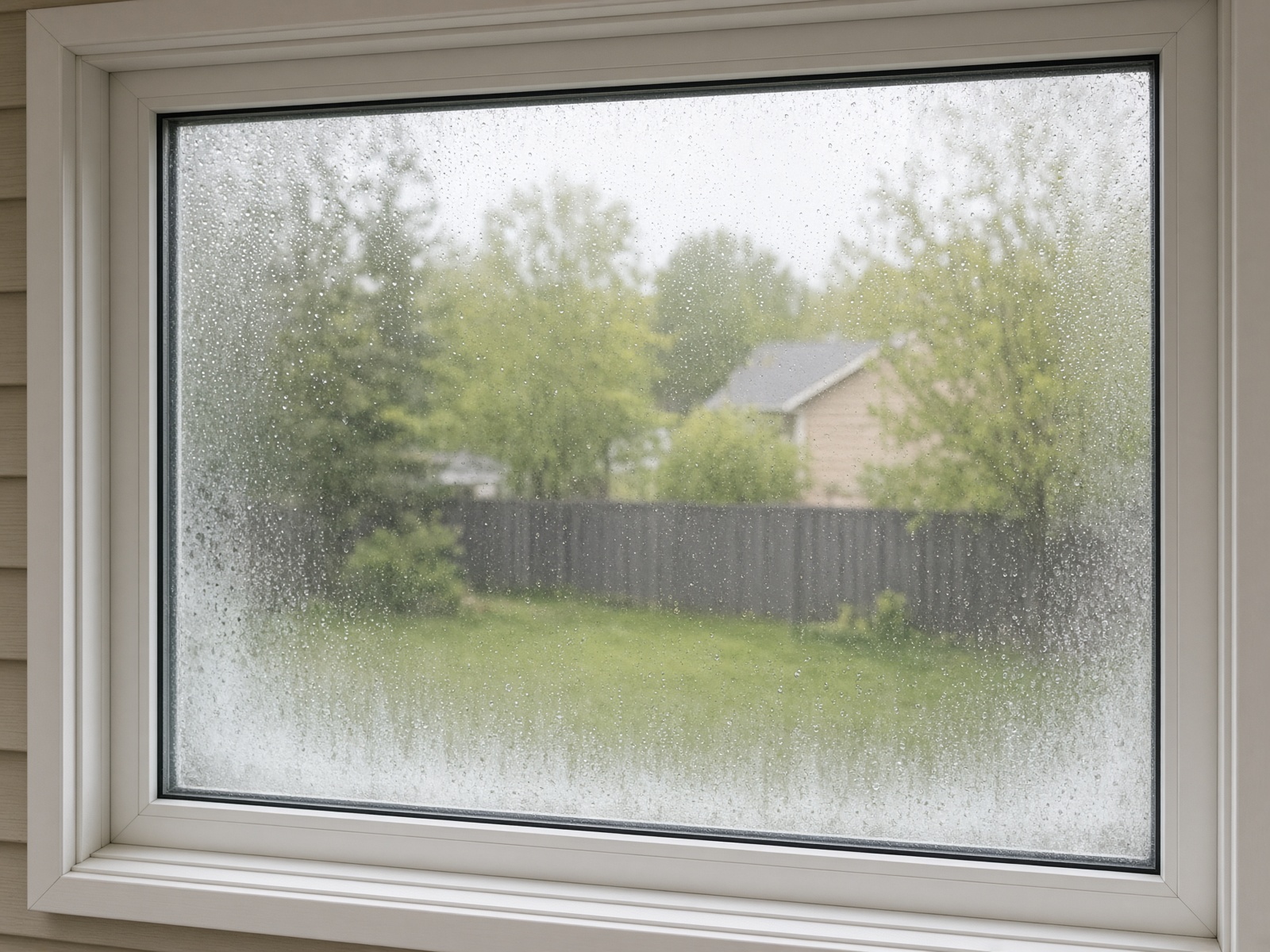
HAZE VS. DIRT
Surface soil wipes off. Internal haze between the panes does not—and it means the argon or krypton seal has failed. Catch it during a cleaning while the 10–20 year glass warranty still applies.
2. Revealing "Crisp Light" Satisfies the Eye while Uncovering Hidden Structural Issues
There is a reason freshly cleaned glass is often described as "crisp." When a window is stripped of its film of pollen, dust, and hard-water residue, daylight enters the room undiffused—sharp, high-contrast, and true to color. That crispness is not just pleasing to the eye; it is a diagnostic. Clean glass is the only way to honestly evaluate what is happening on and around the window itself.
A layer of grime hides the early structural warnings that precede costly failures. Once the glass is clear, a technician can spot micro-fissures radiating from stress points, hairline cracks that have not yet traveled across the pane, and the fine separation lines where perimeter caulk is pulling away from the frame. Those tiny caulk gaps are how wind-driven water enters the wall cavity—long before a leak ever shows up on an interior sill. Clear glass also exposes corroded hardware: pitted operator cranks, rusted balance springs, and oxidized latch mechanisms that will eventually bind or fail.
None of these warning signs are visible through a dirty window. The aesthetic reward of crisp, brilliant daylight and the protective value of a clear view of your glass are the same act: you cannot see what the glass is trying to tell you until the glass is clean.
WHAT CRISP LIGHT REVEALS
Clean Glass → Crisp Daylight → Micro-fissures, failing caulk, and corroded hardware become visible → Small repairs caught before they become structural failures
3. Regular Cleaning Prevents Permanent Glass Etching and Hard Water Damage
Glass may feel perfectly smooth, but under magnification it is a porous, liquid-like material riddled with micro-cavities. When irrigation overspray, acid rain, and airborne minerals from sprinkler runoff and building runoff are left to dwell on the surface, calcium and magnesium penetrate those pores. As the Texas sun bakes the moisture away, the minerals bond chemically with the silica in the glass in a process called etching.
Etched glass develops milky white spots, a dull uniform haze, and eventually micro-pitting that no standard glass cleaner can remove. The damage is permanent because the glass itself has been chemically altered. The only defense is timing—removing the minerals before the bond forms. Scheduled professional washing with pure water lifts corrosive deposits while they are still sitting on the surface, before they ever become part of the glass.
| Stage of Exposure | Glass Condition | Restoration Remedy |
|---|---|---|
| Early Contamination | Dust, pollen, light hard water spots | Standard professional pure-water washing |
| Moderate Exposure | Baked-on mineral rings, dull surface haze | Specialty chemical restoration & polishing |
| Severe Chemical Etching | Permanent micro-pitting, deep calcification | Full glass pane replacement required |
4. Protecting Window Tracks, Frames, and Sills from Water Damage and Mold
The glass is only one part of the window system. Tracks, frames, and sills carry the structural and drainage burden, and they are where water damage quietly takes hold. Every sliding and double-hung window has weep holes—small drainage ports engineered into the bottom track to channel wind-driven rain back to the exterior. When those weep holes clog with pollen, insect debris, and hardened dirt, water has nowhere to go and pools inside the track instead.
Standing water in a blocked track does exactly what standing water always does: it degrades the seal, saturates the sill, and creates the damp, organic-rich environment where mold and mildew thrive. Over time the perimeter seal degrades, moisture wicks into the framing and the surrounding wall, and what began as a clogged weep hole becomes rotted wood, stained drywall, and a mold problem that reaches far beyond the window itself.
Professional window cleaning is not a glass-only pass. It includes vacuuming the tracks, clearing the weep holes, wiping the sills, and inspecting the frame-to-wall sealant. Keeping tracks, sills, and weep holes clear is the single most effective way to prevent the slow water damage that destroys window framing and invites mold into the home.
THE WEEP-HOLE CHAIN
Clogged Weep Holes → Pooled Water in Track → Seal Degradation & Sill Saturation → Mold, Rot, and Wall Damage
5. Professional Inspection Saves Money by Maximizing Energy Efficiency
A clean, well-sealed window is an energy asset; a dirty, failing one is an energy liability. The argon or krypton gas sealed between the panes of an IGU is what slows heat transfer and gives the window its insulating value. When that seal breaks and the gas escapes, the window loses a meaningful portion of its insulating performance and the HVAC system has to make up the difference.
In North Texas, that difference is measured in real money. Brutal summer sun pours through under-insulated glass, and the air conditioner runs longer and harder to hold the setpoint. A window that has lost its gas fill, or that is coated in a film of dirt blocking beneficial daylight and absorbing heat, forces the HVAC system to cycle more often through the hottest part of the year. The result is higher monthly power bills and added wear on equipment that is already working at its limit.
While we clean, we keep an eye out for the visible warning signs of the failures that quietly drain efficiency—broken seals, failed gas fill, degraded caulk, and blocked weep holes—before they compound into a season of inflated utility bills. A window that is clean, sealed, and draining properly costs less to live behind, every month of the year.
EFFICIENCY DRAIN
Broken Seal → Argon/Krypton Gas Lost → Lower Insulating Value → HVAC Runs Longer in Texas Heat → Higher Monthly Bills
Partner with Wrangler Washers to Protect Your Investment
Clean windows are not a cosmetic indulgence—they are a way to notice problems early, and a line of defense for your home's structural health. Every professional cleaning is also a chance for us to point out what we see: a broken seal while it may still be covered, failing caulk before water enters the wall, weep holes before they breed mold, and hard-water minerals before they cause lasting damage to the glass.
Wrangler Washers brings pure-water technology and trained eyes to every job across North Texas. We clean the glass, clear the tracks, and point out the warning signs we notice — so a small, fixable problem never becomes a costly home repair. Protect your investment and your energy bills with a team that treats every window as part of your home's structural envelope.
Protect your home's glass and structure — learn about our window cleaning, visit our FAQ, or contact us to schedule.