7 min read
Walking into a newly finished home is an exciting milestone. In fast-growing North Texas communities like Northlake, Justin, Argyle, and Flower Mound—as well as on custom rural builds across Wise County—neighborhoods of brand-new, modern homes are rising at record pace.
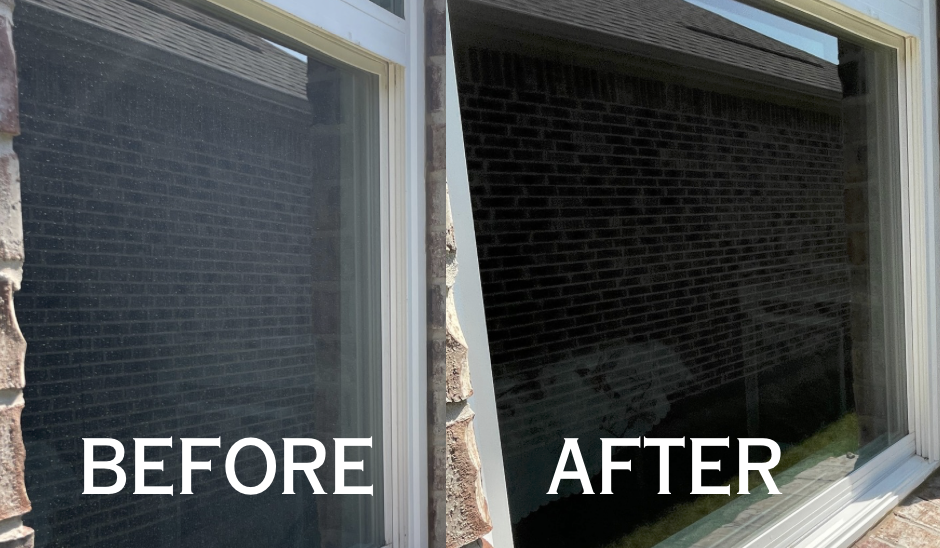
Yet, when you look closely at your pristine new windows, you'll likely notice that the glass doesn't look quite right.
A persistent hazy fog, rough white flecks, smeared silicone lines, and sticky adhesive patches often obscure the view.
Many buyers assume the standard builder "final clean" leaves windows move-in ready. In reality, general construction clean-up crews use basic mops and rags designed for high-speed turnover, not detailed glass restoration. Left behind is a specific mix of abrasive construction debris that threatens to permanently damage your panes if handled incorrectly.
Here is why post-construction glass detailing is essential before moving your furniture in—and how it protects your home before your builder warranty walkthrough closes.
Only a surface rough-wipe. Builders contract general cleaning crews to sweep floors, wipe down counters, and remove visible trash. However, their window cleaning is typically limited to a fast wipe with a damp rag or garden hose. This misses microscopic silica dust, dried mortar splatter, silicone caulking smears, and window manufacturing stickers—and often grinds abrasive dust directly into the glass surface.
Building a home is an inherently dusty, chemical-heavy process. Throughout framing, texturing, masonry, and exterior trim installation, several aggressive compounds bond to your window glass:
When new homeowners see a film of white drywall dust on their windows, the natural instinct is to grab a bottle of spray cleaner and a microfiber towel or paper towel.
This is the single most common way brand-new windows are ruined.
Because drywall dust and masonry residue are made of sharp silica crystals, dry-wiping or applying downward pressure with a rag turns the dust into sandpaper. As you drag the cloth across the glass, you grind microscopic rock particles directly into the smooth surface, creating permanent arc-shaped scratches known as micro-abrasions.
These fine scratches can never be polished out of modern residential glass. The only way to clean heavy construction fallout safely is through high-lubricity surfactants and pure-water flushing, lifting the grit away from the pane before any mechanical tool touches the glass.
Only by trained professionals using specialized equipment. Most modern residential builds use tempered glass on patio doors, bathroom windows, and panes near the floor. Tempered glass frequently contains microscopic imperfections called "fabricating debris" on its surface. Scraping with a standard utility razor breaks this debris free and drags it across the pane, causing widespread, irreversible scratching. Professionals use specialized lubricants, carbon-steel scrapers, or chemical softeners to dissolve overspray without blade friction.
While the clarity of the glass is what you see, the mechanical condition of the window tracks and weep holes is what keeps your home dry during severe North Texas storms.
During the drywall, painting, and trim stages of construction, heavy volumes of joint compound, sawdust, and texture overspray drop straight down into the window frame tracks.
| Problem in New Tracks | Functional Consequence | Long-Term Risk |
|---|---|---|
| Caked Drywall Slurry | Hardens into concrete-like paste when wet | Jams sash balances; tears bottom weatherstripping |
| Plugged Weep Holes | Exterior drainage slots become fully blocked | Rainwater backs up into the frame and overflows the interior sill |
| Silicone Debris in Corners | Prevents window sash from fully seating and latching | Drafts, conditioned air loss, and elevated energy bills |
Window frames are engineered with small drainage exits on the exterior bottom called "weep holes." When water hits the exterior pane, it channels into the bottom frame track and exits through these holes.
If drywall dust and sawdust are left sitting in the track, the first heavy rain turns that dust into a thick paste that clogs the weep channels. Unable to drain outward, the water level rises inside the frame, overflowing the interior sill and leaking down inside your brand-new sheetrock and insulation.
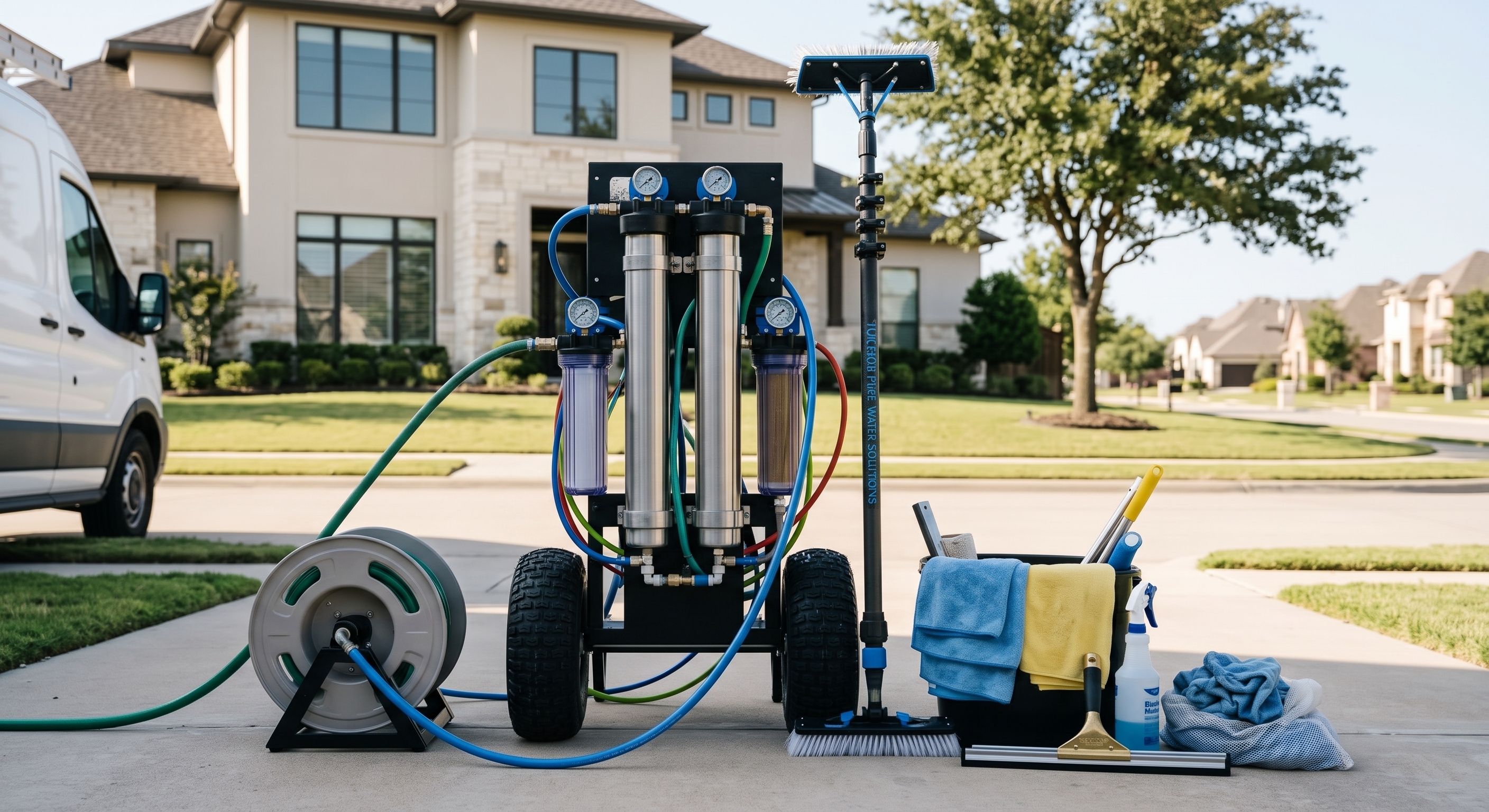
Deep-cleaning window tracks requires specialized narrow-nozzle vacuuming, soft detailing brushes, and targeted flushes to verify the weep channels are 100% open and draining.
Every new build comes with a final inspection period and a builder warranty punch list. Once you sign off and accept the keys, getting a builder to replace a scratched or etched window is nearly impossible—they will routinely claim that the moving company, window treatment installers, or homeowner caused the scratches after closing.
Getting a professional post-construction glass clean done before your final walkthrough accomplishes two vital goals:
Moving into a new home should be a celebration, not a weekend spent scrubbing paint overspray and caked drywall dust off high windows.
At Wrangler Washers, our post-construction glass detailing team understands the delicate chemistry of new windows. We service homeowners and custom builders throughout Wise, Denton, and Parker Counties—including Northlake, Justin, Argyle, and Flower Mound—using non-abrasive chemical extraction, pure-water systems, and deep track detailing. We clear away construction remnants safely, protect your glass warranties, and ensure your new home looks its absolute best.
Get your windows detailed before your furniture arrives and your window blinds go up.